This article is part of our new series, The People of Leros, where we highlight individuals either from the island or who have chosen Leros as a special home. Each person stands out through their unique story, passions, and the meaningful ways they enrich the community.
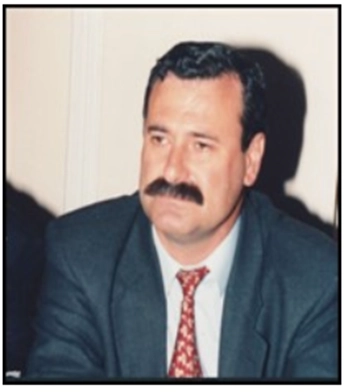
Dimitris Isichos, born in Leros in 1952, is an architect and engineer educated at the Polytechnic University of Milan, with a long and distinguished professional and institutional career in Greece. He is one of the most significant figures to have contributed to the study, documentation, and promotion of the history and architecture of Leros, through his contribution to the establishment of the Historical Archive of Leros and the Folklore Museum of Leros.
Alongside his professional and scholarly pursuits, he has also been deeply engaged in viticulture, developing vineyards and a small winery on the island – a personal endeavor that reflects his enduring commitment to the land, its traditions, and its sustainable development. This interview is conducted as a modest acknowledgment of his long-standing and valuable contribution to the preservation and dissemination of Leros’ cultural and architectural heritage.
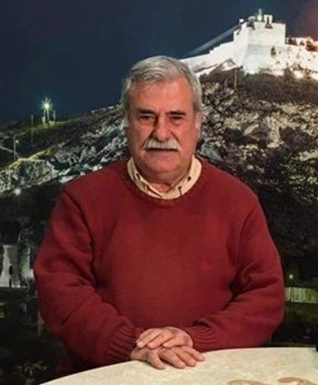
Mr. Isichos, let’s start with a brief self-introduction. How would you describe yourself to someone meeting you for the first time?
My name is Dimitris Hsychos, son of Antonios and Irini, born in Leros in 1952. I am a civil engineer, graduating in 1981 from the Polytechnic University of Milan, and have practiced my profession for many years. Since 1986, I have worked at the Ministry of Economy in various departments, committees, and roles, primarily dealing with private and public investments and EU programs. I also served for seven years at the Office of Prime Minister Kostas Simitis, as well as in ministries including Merchant Shipping, Culture (Youth Deputy Ministry), Agriculture, and the Hellenic Parliament. I collaborated with the Regulatory and Environmental Planning Organization of Attica to protect urban green spaces.
I have served as President of the Institute of Agricultural Research, Vice President of the Public Real Estate Company, and as a board member of ERGOSE S.A., the National Housing Bank, the School Buildings Organization, and committees including the Public Gardens & Tree-Lined Streets Committee and the Technical Council of the Ministry of Foreign Affairs.
I also served as a member and Secretary General of the Board of the Federation of Dodecanese Associations of Athens–Piraeus, and since 1984 have been a member-and since 2011 President-of the Panhellenic Leros Association, publishing Leriaká Nea.
Politically, I was elected twice as a Regional Councilor of Dodecanese (1989 and 1995), representing the Province of Kalymnos. I also helped my brother Manolis establish the Historical Archive of Leros and the Folklore Museum in Pyrgos Bellenis, collecting objects, photographs, drawings, and publications that are now preserved there. I am married to Pinelopi Konstantinou and have two children, Iro and George.
I have received honors from the Ecumenical Patriarchate of Constantinople, the General Directorate of the State Archives for my contribution to creating the Leros Local Archive, the Panhellenic Union of Leros for preserving the association, and the Municipality of Leros for efforts in the island’s development.
In 1994, you embarked on a bold venture: establishing a vineyard and a small winery in Leros. How did this idea come about?
It was indeed a bold initiative, which I wanted to undertake in my homeland. I had purchased some land in Leros and felt that vineyards and olive trees were closer to my personal interests, without aiming for profit initially. However, as the vineyard and olive groves grew, I had to take it seriously. I brought in expert scientists to guide me, and after many efforts, we reached 50 acres of various grape varieties and 1,000 olive trees. Next came the necessity of building the winery, purchasing equipment, and establishing the necessary infrastructure.
Leros is not known as a traditional wine-producing region. What convinced you that this project could succeed here?
That’s not entirely true. In the last century, all the islands cultivated significant vineyard areas. Oikonomopoulos’ testimony in Leriaka (1888) describes many old grape varieties grown on the island for eating, producing souma from the grape pomace, and for raisins. This shows the extensive presence of vineyards. Even the Italians imposed a tax on anyone owning a distillation still, controlling and sealing production. Vineyards existed all over the island, from Xirokampo to Partheni, mostly dry-farmed.
"I am proud that this agricultural facility now employs people who understand wine and viticulture."
What were the biggest challenges in the beginning-regarding soil, water, climate, or even the local market?
The challenges were many, with water being the most pressing. We paid the highest connection fee to the municipal water network-1.4 million drachmas-because it had to come from the “Artemis” restaurant. However, the water sent by the municipality was salty and damaged the vines. We then transported water by tanker from wells with good water, which greatly increased operating costs in the first years. After extensive study, we built two reservoirs lined with special plastic, which solved the problem for many years.
The soil was poor, but we enriched it with organic fertilizers and poultry manure to make it suitable. The climate is excellent, though more irrigation rainfall would help maintain summer soil moisture. As for the local market, restaurants rarely suggested Lerian wine like other local products, because suppliers provide cheap, low-quality wine. Restaurants could periodically host wine-tasting events from the island’s two wineries.
How difficult is it to produce quality wine on a small island with such limited resources?
Leros wine, even the amateur home-made varieties, is very high quality because we produce small, controlled quantities without chemical additives. The same applies whether producing 2 million bottles or just 5,000. Large companies use materials that small wineries do not. Even small variations in grape location, like eastern vs. western Assyrtiko, affect taste. Globally, quality wine comes from small, controlled vineyards that know how to produce it. In Leros, both George Hatzidakis and Isichi Ampelones vineyards produce high-quality, healthy wine, far superior to what is commonly sold in shops.
What have you learned from this journey, both as a producer and as a person?
I learned that before undertaking something, you must educate yourself thoroughly to avoid mistakes. I couldn’t always be on the island, and there wasn’t properly trained local staff. I had to bring pruners from Rhodes and Nemea because local pruners were harming the vines. We trained them properly, and later, many locals gained knowledge and experience. I am proud that this agricultural facility now employs people who understand wine and viticulture. In the past, I sold many crates of wine to French, Italian, and Scandinavian boat owners in Leros’ marinas. Today, wine-tasting programs attract mainly tourists and are very successful. Restaurants could benefit more by learning these programs to pair wines with dishes and increase revenue.
Beyond architecture and winemaking, you have dedicated yourself to writing books on Leros’ history and architecture. How did this intellectual pursuit emerge?
Architecture provided the financial means for my family, while viticulture began as a hobby and became a business. Writing books is a serious endeavor I started with my brother in 1994, aiming to write a book on Lakki. His sudden death paused the work, but from 2005 I began preparing, and in 2015 published the first book on Lakki, followed by another on Italian constructions on the island. I focus solely on Leros, a long-term effort requiring patience, research, and careful archival work. For example, I could easily write a book today just on the Lakki school, analyzing every architectural detail.
"Artificial intelligence is used to extract information from books and archives... Recording history ensures future generations can access well-documented knowledge."
Which of your books do you consider the most important or personal, and why?
I value all my books equally, as each holds fond memories. The most challenging was The Battle of Leros, my first historical book, requiring research from both sides and many foreign archives. Publishing costs are high, and support from institutions is limited. For instance, the money spent over the years could have produced two illustrated books on Leros accessible to everyone. Another significant work is the new book on the castle, the heart of Leros’ history. Today, artificial intelligence is used to extract information from books and archives; if events aren’t documented, AI cannot find them. Recording history ensures future generations can access well-documented knowledge.


What was the greatest challenge in writing The City of Lakki, Portolago, where you highlight the unique architectural identity of Leros?
The main challenge for the first book was the enormous number of sources used. As an architect, I would write a different book today, but few would enjoy it, so I created one accessible to the public. Lakki’s uniqueness is evident in buildings like homes, shops, the theater, the school, St. Nicholas, the Leros Hotel, the town hall, and some structures in Lepida. The urban planning of Lakki, built from scratch, is remarkable. The biggest challenge was gathering extensive information on streets, squares, buildings, and residents. My brother and I collected all this from people who lived and worked there. The documentation is unique and invaluable for future researchers.
Are you currently working on a new book or other upcoming project?
I have completed a series of 56 biographies of notable Lerians, soon to be published, including patriarchs, metropolitans, benefactors, ministers, politicians, heroes, doctors, merchants, builders, architects, painters, journalists, pianists, poets, shipowners, and philologists. The collection may grow to about 70 biographies, helping young people learn about and be inspired by distinguished Lerians.
Additionally, I am researching the life of Foreign Minister Ioannis Sofianopoulos, who convinced Molotov to agree to return the Dodecanese to Greece. History has largely ignored him – he was never honored or commemorated, so I aim to correct that, even posthumously.
Dimitris Isichos is a remarkable person whose lifelong dedication has greatly benefited Leros. Through his research, writing, and personal initiatives in viticulture and cultural preservation, he has made a lasting impact on the island. His hard work in recording the history and architecture of Leros, building important archives, and supporting local traditions has created a valuable legacy for future generations. We warmly thank him for his important contributions, his love for Leros, and his commitment to protecting and sharing the island’s unique heritage.
BOOKS by Dimitris Isichos (in Greek):
- The City of Lakki, Leros – La città di Portolago, LEROS 2015
- The Island of Leros: The Impregnable Island of the Mediterranean, LEROS 2015
- The Leros Residence, LEROS 2016
- The Battle of Leros, LEROS 2021
- The Castle of Panteli – The Castle of Leros, LEROS 2025
- The Church of Panagia of the Castle, LEROS 2025
- The Lerian Dictionary, LEROS 2025