This article is part of our series, “The People of Leros”, where we highlight individuals either from the island or who have chosen Leros as a special home. Each person stands out through their unique story, passions, and the meaningful ways they enrich the community.
Meet Flora Koutozou, the heart behind the Leros Animal Welfare Association. Discover her story of rescuing, supporting, and the tireless fight to give every stray dog on Leros a second chance at life. The Leros Animal Welfare Association was created for every stray and abandoned dog to find safety, food, and above all, affection. It is a sanctuary where the true measure of the island’s spirit is found in the care of its most vulnerable inhabitants. Behind this endeavor are people with big hearts, who dedicate their time and soul every single day in rescuing and rehoming dogs in need. Their work is a relentless fight against indifference, turning stories of neglect into tales of hope and new beginnings. We spoke with the President of the Association, who shared with us the story, the challenges, and the deep emotion behind this vital mission.
When and how did you personally start caring for stray dogs?
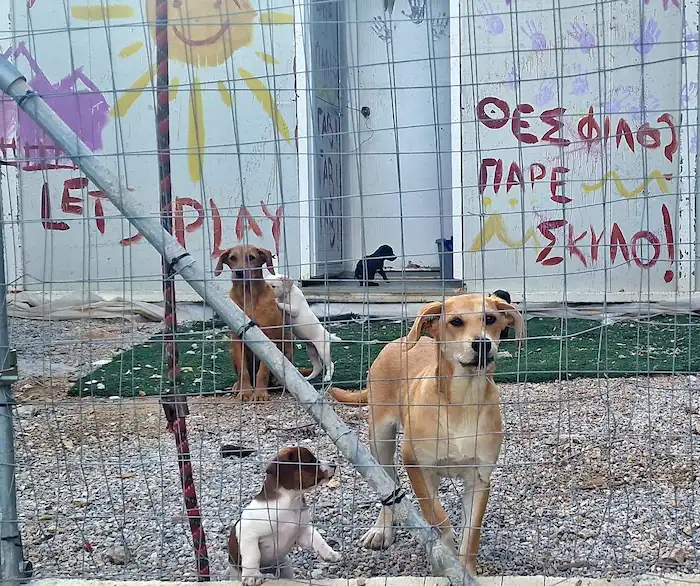
I was born in Leros in 1970. I left the island for 17 years and returned for work as a hairdresser, but also because I wanted better living conditions for my child. My love for animals started at a very young age. My grandfather was a farmer, so I had contact with animals since I was a kid. I looked after little animals, even raising some with a baby bottle. I started more organized work in 2008, when I began caring for stray dogs I found on the mountain, exposed to dangerous environments. At first, I fed and cared for them alone. Over time, I met people with the same sensitivity, and we formed a group that began dealing more systematically with feeding, sterilizations, vaccinations, and adoptions. Now, this responsibility is part of my daily life. It fulfills me, and I feel like I can’t stop.
Was there a specific story or experience with a dog that particularly touched you and made you continue this effort?
There are many incidents that have left a mark on me. Over time, you learn to read a dog’s behavior and understand what they are trying to tell you through their eyes. One story I’ll never forget is about a little dog named Fugá (The Fugitive). One day, I felt as if he were telling me, “Don’t go out today.” The next day, the dog was dead. These moments stay inside you. They hurt, but at the same time, they drive you to keep going because you realize how much these animals need protection, care, and love.
How did the story of the shelter in Leros begin? What were its first steps and how has it evolved?
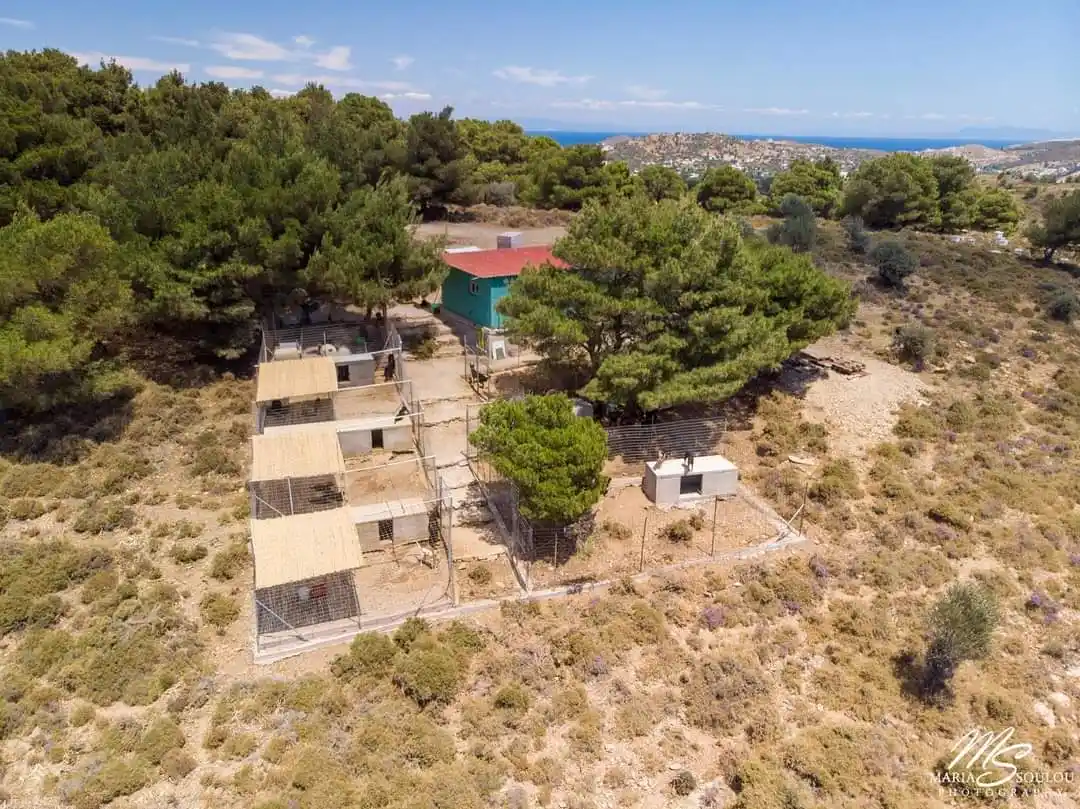
The shelter’s story started quite simply, from a small group of people who loved dogs and couldn’t stand to see them suffering on the streets. In the beginning, there were no facilities and no resources. There were only a few makeshift shelters and a lot of willpower. We cared for a few dogs at a time; feeding them, treating them, and trying to find them homes. The current shelter has been operating for about five years on private land, ensuring that the dogs are not released back to where they were found. Over time, more organized facilities were created, the number of volunteers increased, and a network of people was built to support the effort, whether financially, through adoptions, or through manual labor. From a simple idea of love and sensitivity, the shelter evolved into a living community of people fighting daily for the dogs of Leros.
What do you consider to be the greatest achievement or the most moving moment of the shelter over the years?
The greatest achievement is the number of adoptions, which is constantly growing and makes us truly proud. In the last three years, about 250 adoptions have taken place. Every time a dog finds a home, we feel that every difficulty was worth it. It is deeply moving to see a creature that was found abandoned, scared, or sick get a second chance at life. Equally important is the care we provide to dogs in need of medication, veterinary visits, sterilizations, vaccinations, or specialized tests.
What is a typical day at the shelter like? What is needed for it to function properly, and what are the biggest problems you face?
A typical day at the shelter involves a lot of work. It requires cleaning, feeding, watering, checking for health issues, administering medication where needed, and of course, time for walks and interaction with the animals. For a shelter to function correctly, you need people, time, money, organization, and constant care. The expenses are very high, especially for food, medicine, vets, sterilizations, vaccinations, and transport. Fortunately, there are people who help financially and support us as much as they can. There are months when we cover the costs, but there are other months when the medical expenses are overwhelming. The biggest problem, however, is that there aren’t enough people to help on a daily basis. Thus, all the work falls on just a few people.

Do you collaborate with local authorities, veterinarians, or other groups? In what ways can the public help, and where can they find you?
Yes, we collaborate with vets, authorities, and groups. We work with NEMESIS; we are included in their registries, as well as with MERIMNO for adoptions and information exchange. The Municipality provides what the law dictates, while a new shelter for 25 dogs is being built. Also, we have good service and cooperation with the Police when needed. People can help in many ways: financially, with food, with cleaning, by walking the dogs, by fostering, by adopting, or simply by giving their time and love to the animals.
Do you carry out any actions or programs to inform and sensitize society regarding the dogs?
Yes, we try to do awareness and educational activities, mainly in schools. It is very important for children to learn from a young age what the responsibilities are towards having a dog. Changing mindsets is not easy, and often people find it hard to change. But we believe that information, especially at young ages, can bring about a better attitude towards dogs in the future.
What is the status of strays on the island today? Have you seen a change in the residents’ attitude over the last few years?
The situation remains difficult. Right now, there are many animals in need of care. The shelter hosts about 80 dogs, there are 18 animals under the Municipality’s responsibility, and another 28 being cared for in a home setting. Certainly, steps have been taken in recent years, mainly through adoptions and awareness. However, a change in mindset takes time. There is still a lot to be done, especially regarding responsible guardianship, sterilizations, and animal abandonment.
What is your vision for the future of the shelter and the animals of Leros?
My vision is that one day the shelter will close because there will be no more stray dogs. That is the real goal. Not for shelters to fill up, but for them to be unnecessary. For there to be responsible guardians, for sterilizations to happen, for dogs not to be abandoned, and for all of them to have the home and care they deserve.
Is there a way for someone to help financially? Would you like to give us the association’s account?
Yes, of course. Financial help is very important because the costs are immense. We constantly need food, medicine, veterinary care, sterilizations, vaccinations, and transport for exams or adoptions. Fortunately, there are people who help financially, and thanks to them, we can continue. Anyone who wants to support the effort can deposit into the association’s account found at the end of the page.
Can a volunteer come and spend time with the dogs or help at the shelter?
Yes, they can. Every bit of help is precious. Everyone can contribute in their own way, whether with cleaning, walking the dogs, providing care, or simply spending time with the animals. Animals need not only food and medicine but also human contact, love, and socialization. Even a little bit of time can make a big difference.
Caring for stray dogs is not just an act of kindness; it is a way of life.

Every animal that finds a home, every injured dog that is healed, and every child who learns to love and respect animals is a small victory for us all. The Leros Animal Welfare Association shows us that, with a little love and solidarity, we can make the world a better place, starting with the most innocent creatures among us. If you would like to help, you can visit the shelter, become a volunteer, or offer financial support via the Association’s account. Because every small act of love… makes a big difference.
If you would like to donate towards supporting the Leros Animal Welfare Association, you are welcome to do so below, any donation is appreciated:
- Account Name: Adespotakia Patousakia (Stray Paws)
- Account: 40300547045
- IBAN: GR8301104030000040300547045
- BIC: ETHNGRAA