Have you ever wandered through the countryside of Leros and noticed large, round, stone-built pits, half-buried in the earth? Many passersby walk past them without a second glance, unaware that these silent ruins once roared with fire. They are the lime kilns—the asvestokaminia—once central to life on the island, shaping its houses, chapels, and fields.
Building Fire into Stone
Harmoniously integrated into the hillside, the kilns were more than functional; they were a craft of both necessity and artistry. Workers dug deep, round pits whose size depended on the production they envisioned. As the structure narrowed toward the top, a small opening remained, carefully sealed with a single stone called the papa or “key.” This closure symbolized the kiln’s readiness—a vault of stone awaiting transformation.
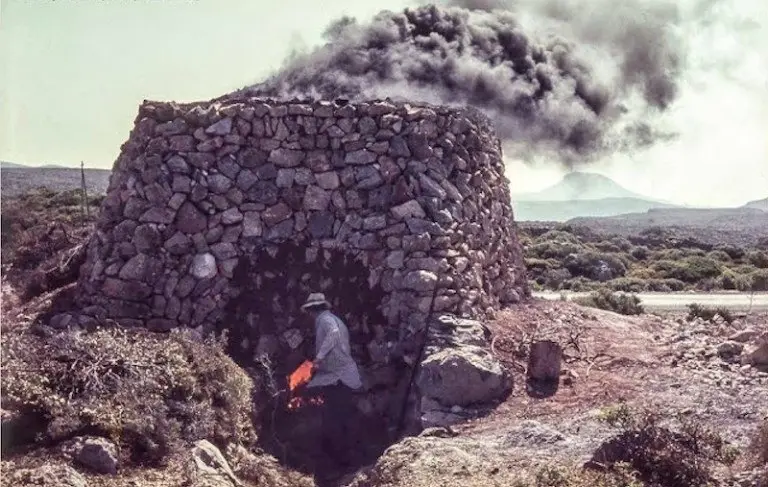
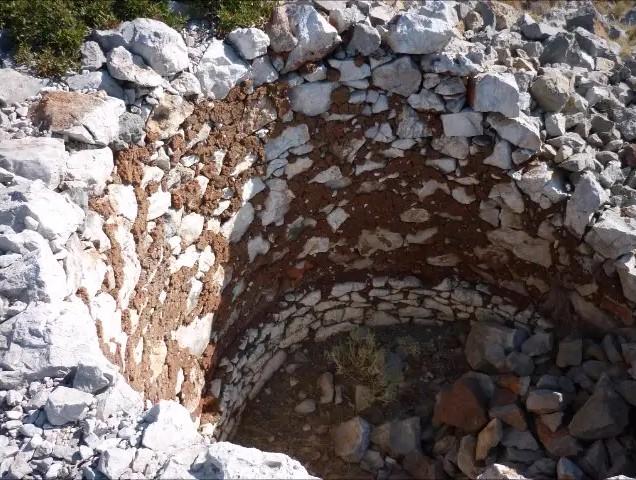
Inside, limestone from the surrounding hills was meticulously arranged by skilled hands. The masons placed each stone with precision, leaving small air gaps so the fire could breathe. The conical interior, reminiscent of ancient Mycenaean tombs, revealed not just practicality but continuity of craft across centuries. An arched door was left at the base—the kiln’s mouth—through which the fire was fed. For three or even four days, flames licked the stone walls, demanding constant attention.
The workers stood guard with long forked sticks or iron rods—the hachali—to stir, adjust, and “feed” the insatiable blaze. It was exhausting labor: sleepless nights, blistered hands, eyes stinging from smoke. Yet from this fire and stone emerged lime, the white gold of the Aegean, indispensable for plastering homes, painting chapels, disinfecting cisterns, and enriching fields.
A traditional lime kiln in use.
A Craft of Life and Survival
For many families of Leros, lime production was not only for their own needs but also a livelihood. Kilns supplied builders, farmers, and neighbors. The whitewashed glow of Leros—the dazzling facades of homes, the shining walls of windmills and monasteries—owed their brilliance to these hidden fires.
The inside of a lime kiln.
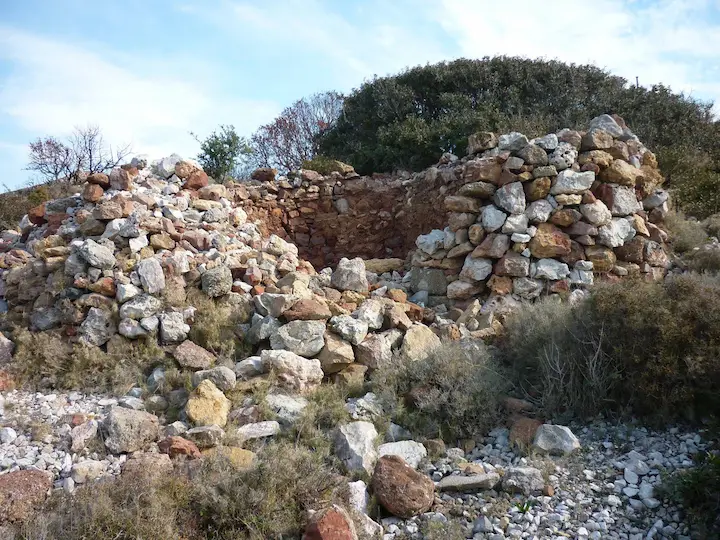
Remains of a lime kiln — a silent witness to Leros’ craft heritage.
Mr. Chondrogiannos, interviewed in the video below, remembers those days vividly. He describes the rhythm of life around the kiln: collecting stones from the hills, gathering fuel, preparing the structure, then keeping vigil as the fire consumed everything. “Every stone had its place,” he says, recalling how a single mistake in stacking could ruin the entire burn. The kiln was both unforgiving and life-giving.
He speaks with pride in the skill required, but also with a trace of sorrow. It was hard work, yes—but it gave dignity, purpose, and a shared sense of survival. Families relied on the lime as much as they relied on their fields or their fishing nets.
Silence After the Fire
By the mid-20th century, the kilns fell silent. Modern materials arrived—cement, industrially processed lime—rendering the old craft obsolete. The knowledge of kiln construction and firing, passed down from father to son, began to vanish. Today, the stone circles stand abandoned, often mistaken for ruins of another kind, their purpose forgotten by most.
Yet they remain powerful symbols. They are evidence of folk architecture and intangible cultural heritage, reminders of a time when the island’s economy depended not on imports but on the ingenuity of its own people.
The last kiln worker’s testimony is more than memory; it is a call to remember that beneath every coat of whitewash on Leros lies not just lime, but the sweat, fire, and endurance of those who kept the kilns alive.